


What happens when AI stops answering questions and starts taking action on our behalf?
In the first article of our AI Disruption series, we explored how artificial intelligence is fundamentally changing the way consumers search for information and discover businesses. In Part 2, we looked at how Google is responding to that disruption and why businesses can no longer rely on traditional search marketing alone.
But there’s something important we need to recognize: We’re still (very much) in the disruption phase.
Businesses are beginning to adjust to AI Overviews, ChatGPT, Gemini, Perplexity, and other AI-powered search experiences. We’re getting accustomed to fewer website clicks, AI-generated recommendations, and a new generation of SEO strategies (GEO, AIO, etc) designed to improve visibility across multiple platforms.
It’s tempting to think we’re finally beginning to understand the new landscape. In reality, what we’re experiencing today is just a reaction in the midst of change.
The next phase of AI won’t just change how people find information. It will change how they make decisions, interact with businesses, and affect daily life.
And that has enormous implications for the future of digital marketing.
From AI Chats to AI Agents
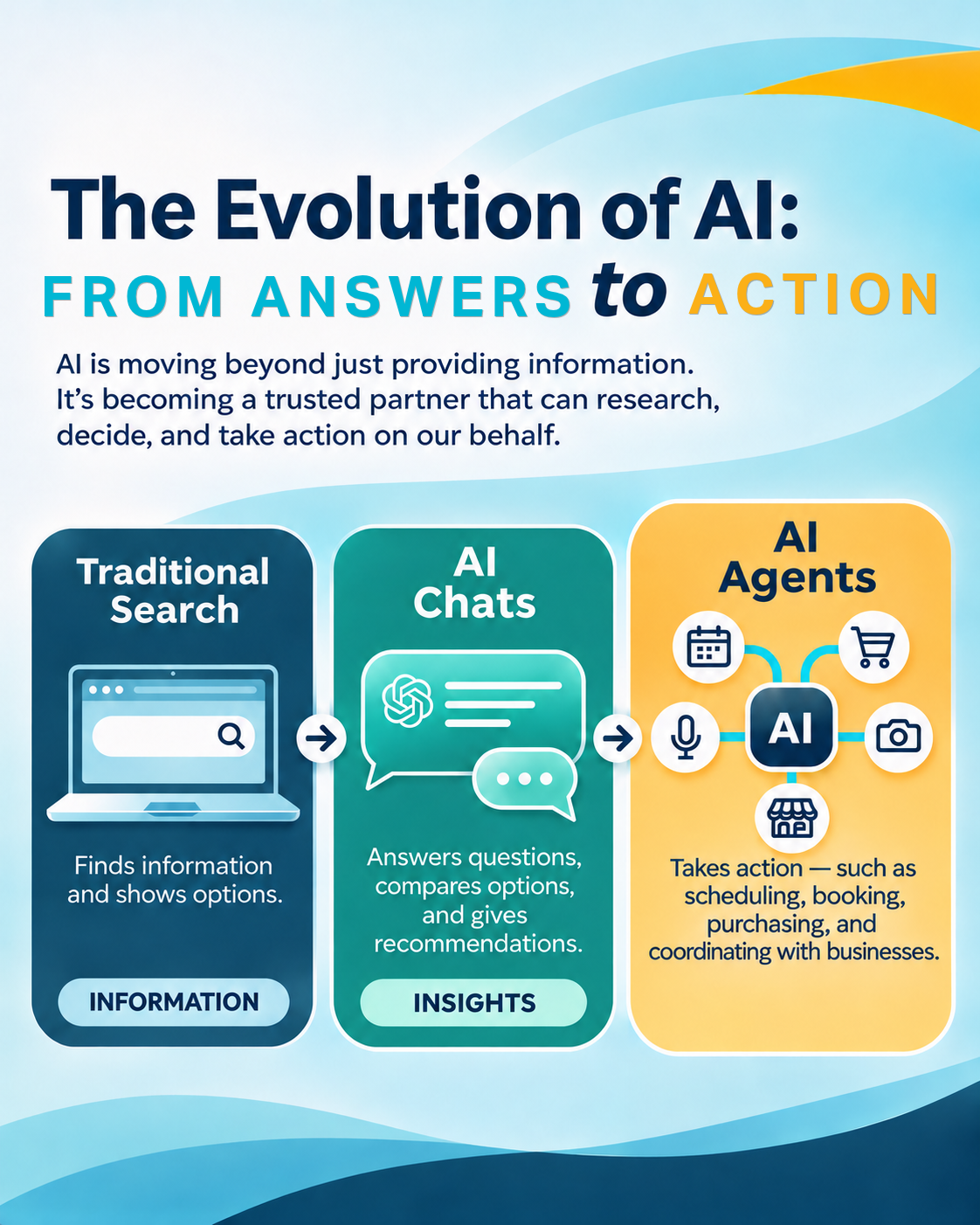
Until recently, most people interacted with AI by asking a question and receiving an answer. You could ask ChatGPT to recommend a restaurant, compare two products, help write an article or explain why your water heater wasn’t working.
The AI provided information, but you were still responsible for initiating each step formulating the actions necessary to complete your goal: call the business, schedule the appointment, or make the purchase yourself.
That distinction is beginning to disappear.
Think about how automobile technology has evolved over the years. First, we had traditional cruise control, which maintained a set speed but required the driver to handle everything else. Then came adaptive cruise control with radar detection, allowing vehicles to automatically adjust their speed based on surrounding traffic. Both are a far cry to what is emerging today: full self-driving – capable of navigating an entire journey with far less human intervention.
AI is following a similar progression.
Early AI chats were essentially cruise control. They could help us complete individual tasks, but we were still navigating. Today’s more advanced AI systems are beginning to resemble adaptive cruise control, capable of researching information, evaluating options, and taking certain actions on our behalf.
The longer-term direction is toward AI agents that can handle increasingly complex tasks from beginning to end, with appropriate permissions and human oversight.
Instead of asking AI to recommend a plumber and then doing the rest yourself, imagine saying:
“My kitchen sink is leaking. Find a reputable plumber nearby who can come tomorrow morning and schedule an appointment.”
The AI could research local providers, compare services and customer feedback, check availability, and potentially book the appointment.
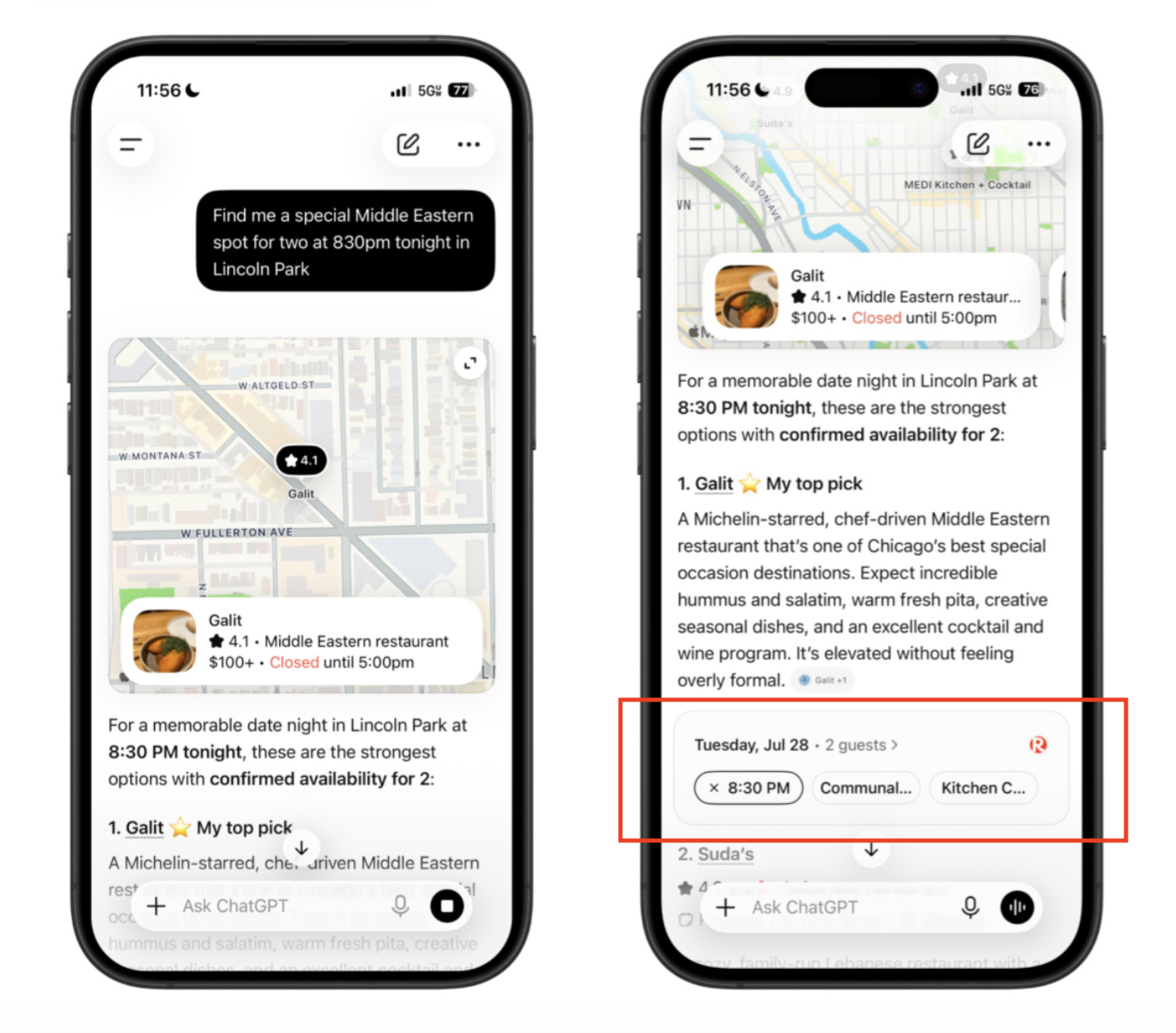
We’re already seeing early versions of this experience. In August 2026, Resy introduced restaurant reservations directly within ChatGPT, allowing users to discover and book participating restaurants without leaving the ChatGPT conversation. AI shopping tools are also becoming capable of comparing products and supporting purchases through eligible merchants.
The traditional customer journey of searching, clicking, researching, and converting is beginning to collapse into a single interaction by delegation.
For consumers, that’s incredibly convenient. For businesses and marketers, it introduces an entirely new challenge.
What happens when your potential customer skips the visit to your website?
How AI communicates with People is Changing
The Search Box is going away.
For decades, interacting with the internet has largely meant typing something into a search box, clicking a result, and navigating information on a screen.
AI is moving us toward a much more natural experience.
We already have multimodal AI, meaning artificial intelligence that can understand and digest multiple forms of information, including text, voice, images, and video. But the opportunity isn’t limited to what we provide AI. It will quickly include AI being multi-model back to us.
Imagine pointing your phone’s camera at a refrigerator with an error code and asking, “What’s wrong with this, and who nearby can fix it?”
In addition to the AI analyzing what it’s seeing and asking follow-up questions; imagine an AI that could walk you through the steps of clearing the error from your refrigerator, both through a voice walk-through and simultaneous video steps on your screen. Right now we only get full show-and-tell via a map application where you are shown where to drive and told when to take an exit.
These experiences are becoming increasingly practical as AI systems combine voice, visual understanding, and interactive responses.
The implications for marketing go well beyond traditional keyword optimization.
Businesses will need to think about how accurately their products and services can be represented through images, video, detailed descriptions, and structured business information. AI may need to understand what a product looks like, where a business operates, whether a service is appropriate for a particular situation, and what makes one company different from another.
And here’s another important consideration: As AI becomes the interface between your business and your customer, you lose longer control of how your business is presented.
The customer might never see your carefully designed homepage, your navigation menu, or the advertising message you spent months refining.
Instead, they may receive a recommendation generated by an AI system that evaluates your business alongside competitors.
That makes accurate information, strong brand recognition, and a credible digital presence more important than ever.
The Next Disruption Is Already Taking Shape
The way consumers interact with businesses continues to change, and this disruption goes well beyond traditional search.
Expect AI to evolve from a simple information tool to a virtual, personal assistant capable of independent research, making reservations, placing purchases, and increasingly taking action on their master’s behalf. At the same time, multimodal technology is changing how consumers ask questions and receive information.
For businesses, the customer journey will look very different in the years ahead. Getting discovered still matters, but the steps between discovery and conversion will increasingly happen within an AI-powered experience.
If AI becomes the primary interface between consumers and businesses, how should businesses prepare?
That’s what we’ll explore in Part 4, including what it means to become AI-ready, how websites may evolve, and why the next generation of digital marketing will require businesses to think beyond traditional search visibility.